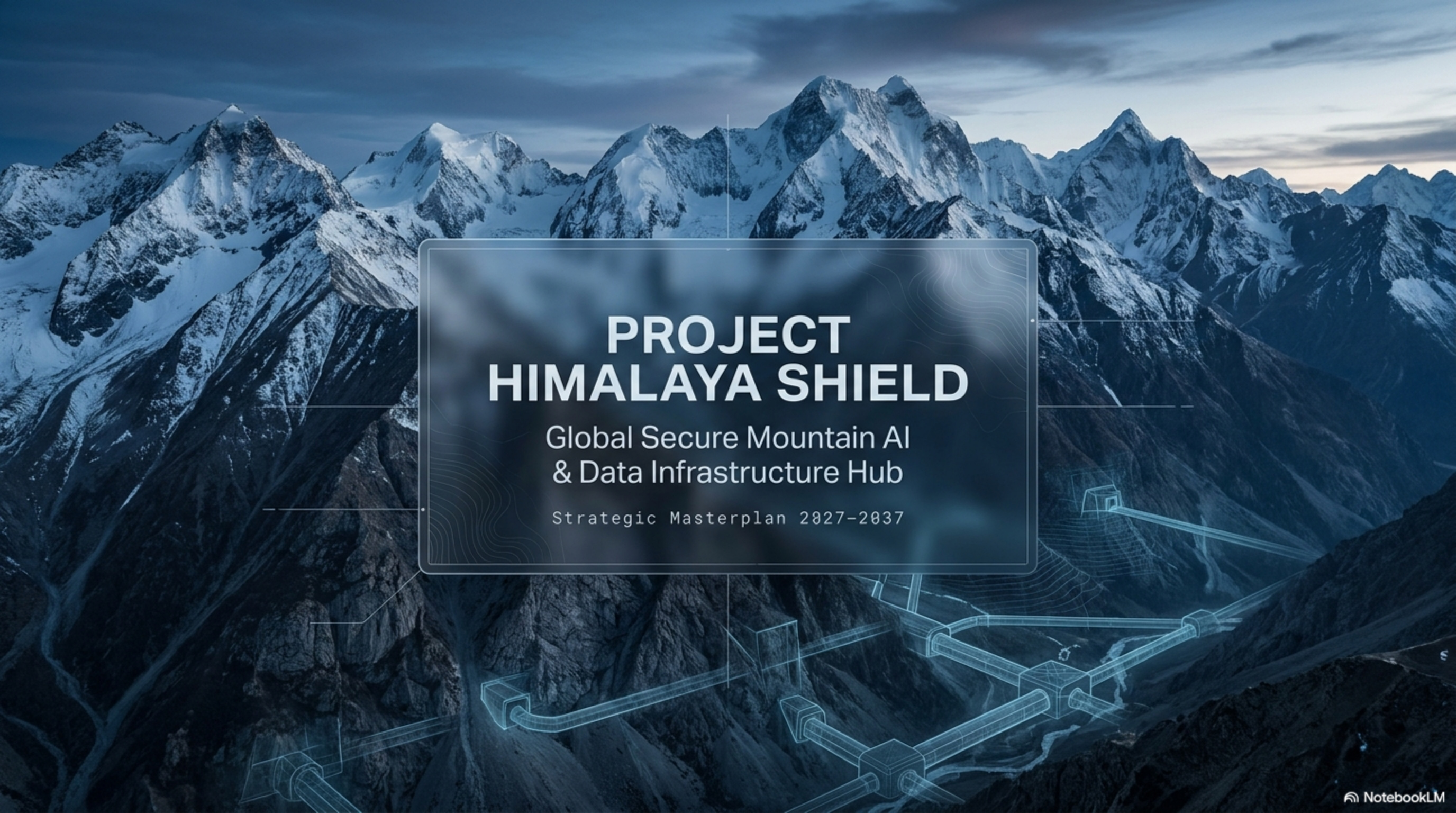
A Global Secure Mountain AI & Data Infrastructure Hub envisioned in the Drass–Zojila Himalayas — engineered for resilience, cooled by altitude, powered by hydrogen.
A large-scale conceptual proposal for a secure mountain-integrated AI and data ecosystem designed to support future computing, cloud services, research, and secure hosting. The masterplan addresses planning considerations, technical approaches, stakeholder participation, governance models, infrastructure requirements, and expansion pathways. Detailed engineering, environmental assessments, market studies, financial models, and regulatory reviews are pre-conditions to implementation.
FROM INVESTOR MASTERPLAN · PG 01Executive Summary
/ 02
Strategic Vision
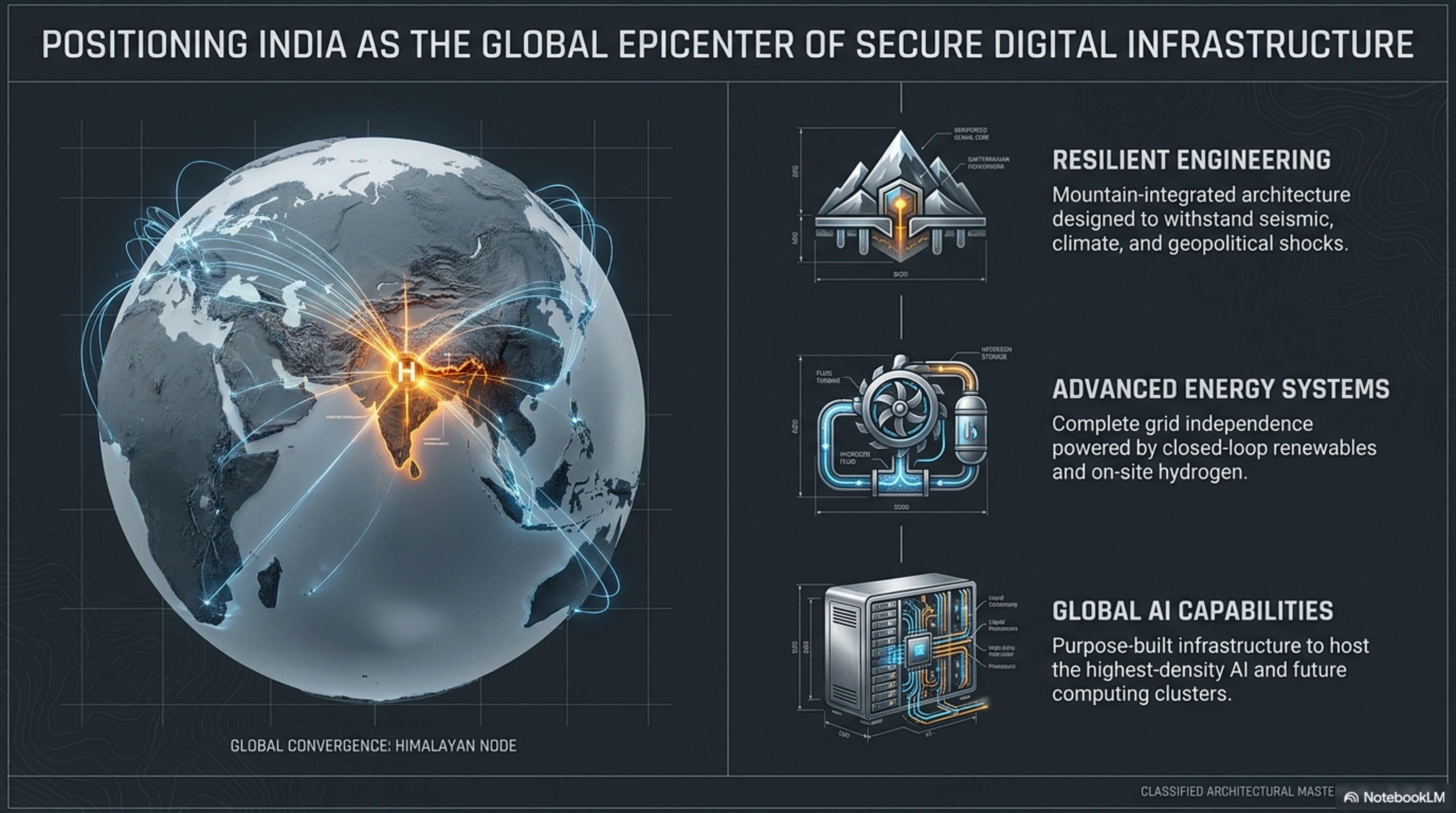
Position India as a future global destination for secure digital infrastructure through resilient engineering, advanced energy systems, and frontier AI capabilities — a 21st-century sovereign hub for compute, research, and secure cloud.
FROM INVESTOR MASTERPLAN · PG 02Strategic Vision
/ 03
Why Drass–Zojila
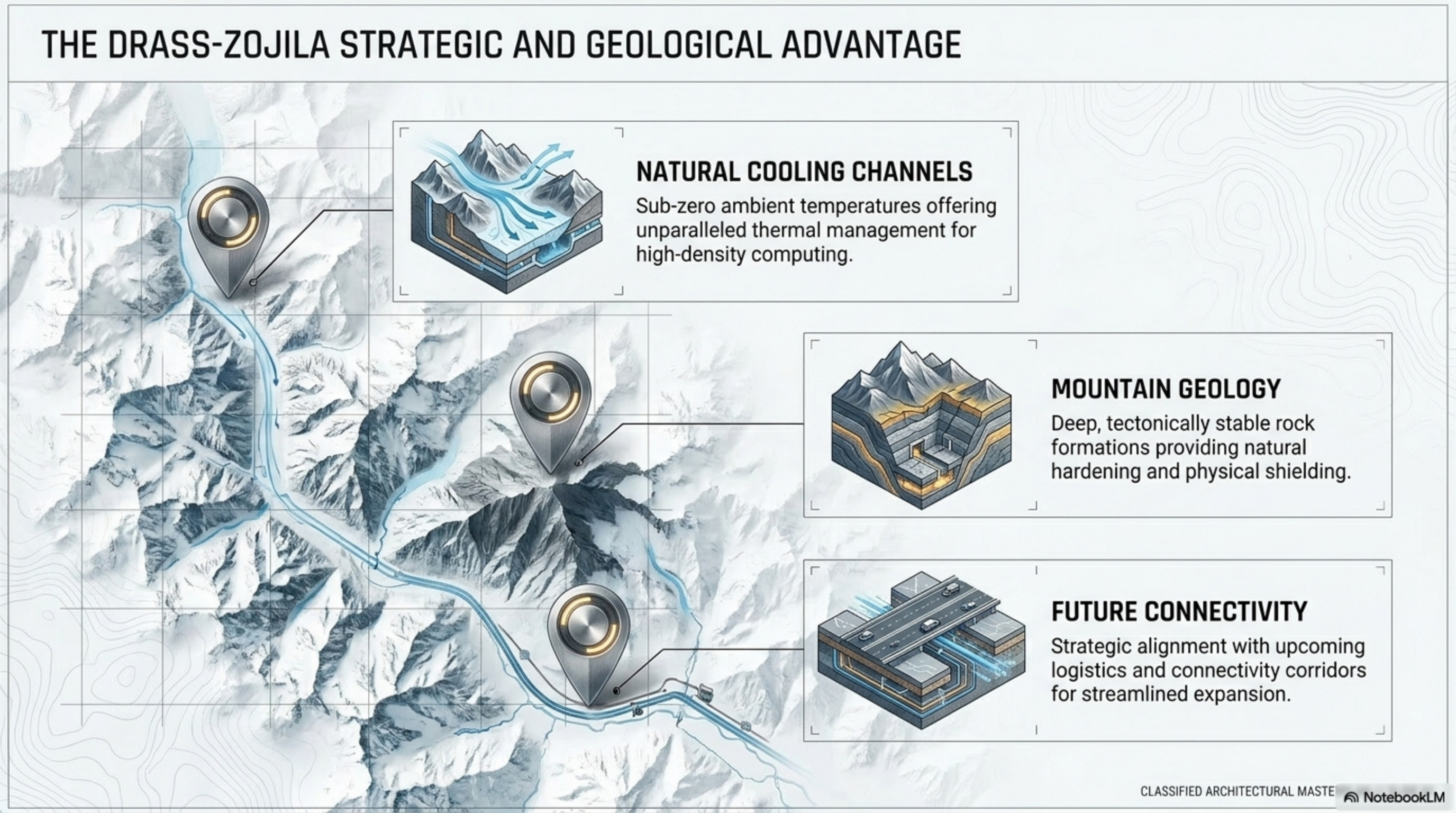
Natural cooling conditions, stable mountain geology, future logistics connectivity through the Zojila tunnel, and abundant expansion potential create a unique strategic proposition unmatched by any conventional data-center geography.
DRASS VALLEY · SEASONAL CLIMATE
DEC — FEB
Winter
AVG LOW
-22°C
AVG HIGH
-8°C
Deep freeze — natural cooling at zero energy cost.
MAR — MAY
Spring
AVG LOW
-2°C
AVG HIGH
+15°C
Thaw window — ideal construction and logistics season.
JUN — AUG
Summer
AVG LOW
+10°C
AVG HIGH
+25°C
Peak access window — full overland connectivity active.
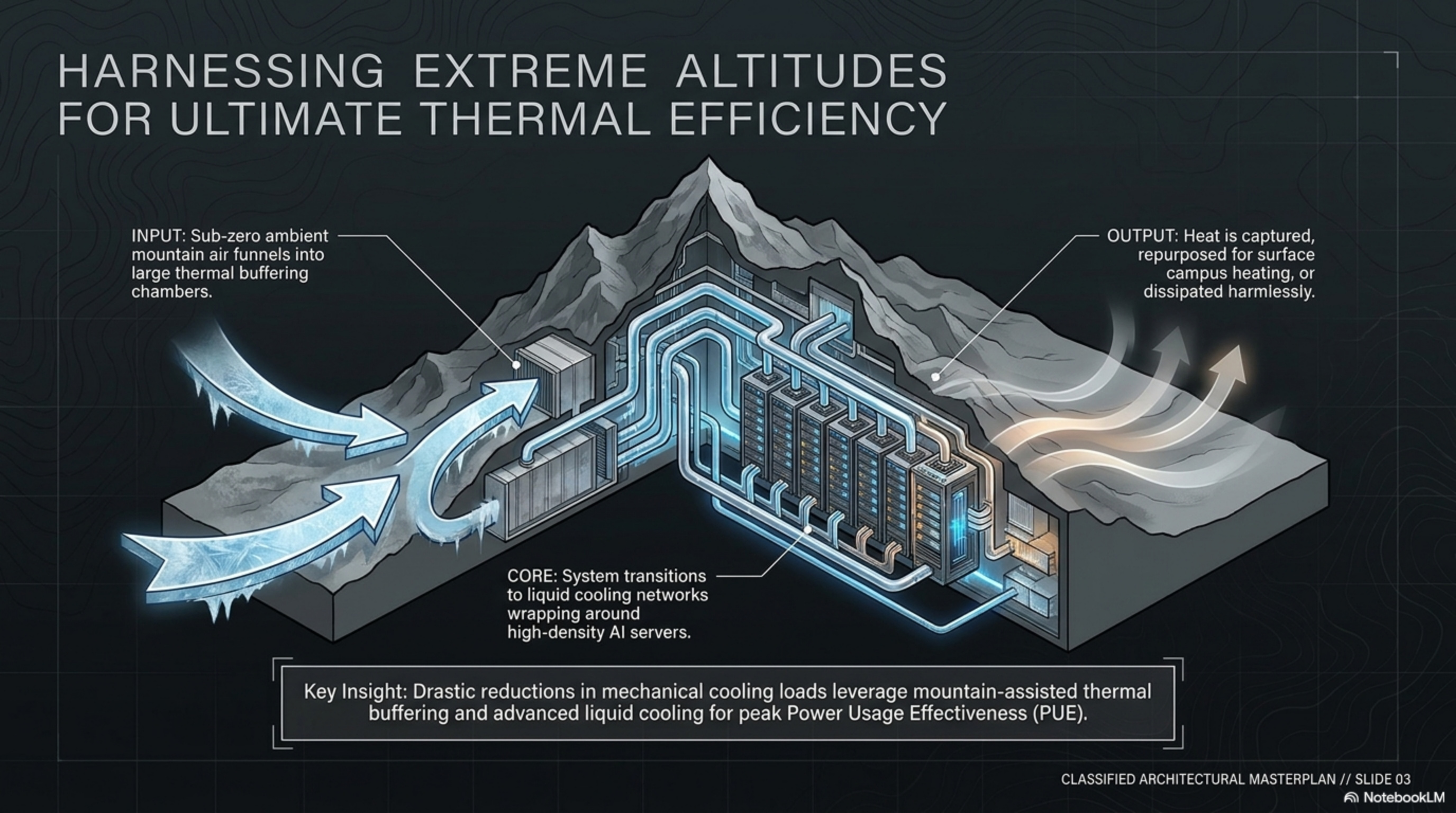
Cold ambient temperatures dramatically reduce mechanical cooling loads. Mountain-assisted free cooling, liquid immersion cooling, and granite thermal buffering combine for one of the lowest PUE envelopes on earth.
FROM INVESTOR MASTERPLAN · PG 04Climate & Cooling Advantage
/ 05
Master Plan
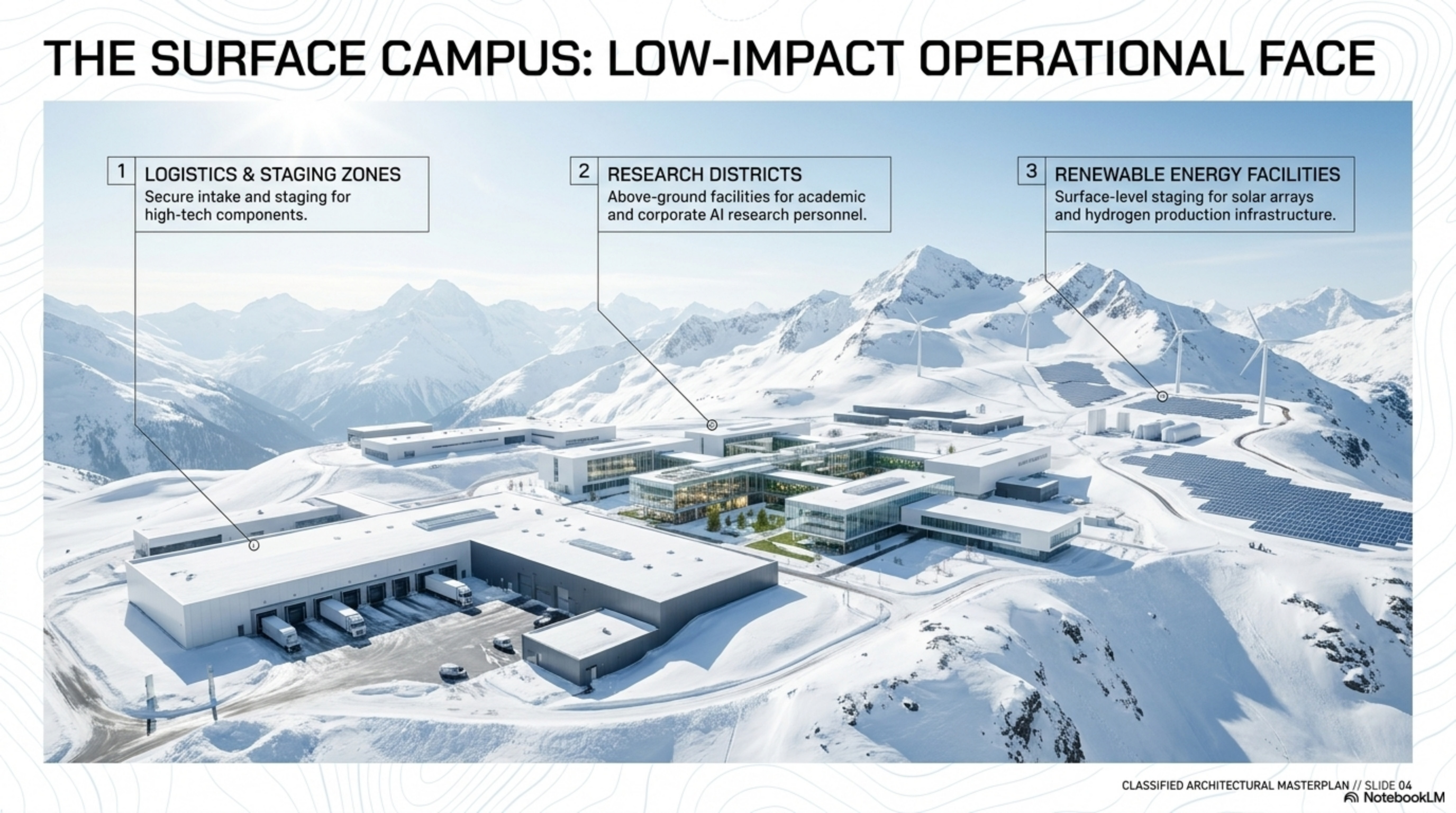
Surface campus, logistics zones, renewable energy farms, hydrogen production plants, research districts, and deep underground technology vaults — composed into a single self-sufficient ecosystem.
FROM INVESTOR MASTERPLAN · PG 05Master Plan
/ 06
Underground Architecture
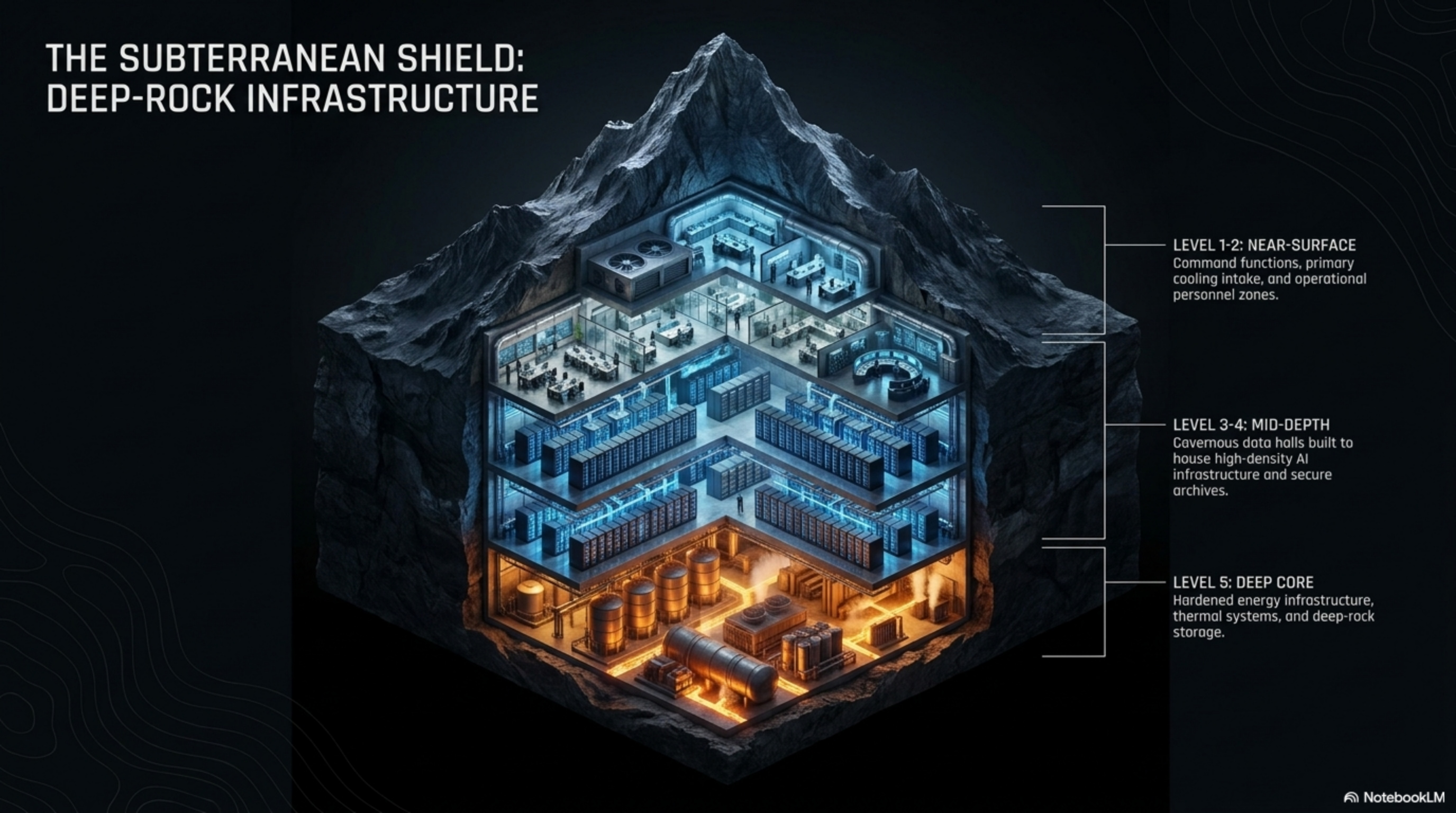
Multiple hardened subterranean levels for operations, data halls, cooling plants, energy infrastructure, secure archives, and command-and-control functions — protected by hundreds of metres of Himalayan rock.
FROM INVESTOR MASTERPLAN · PG 06Underground Architecture
/ 07
AI Infrastructure
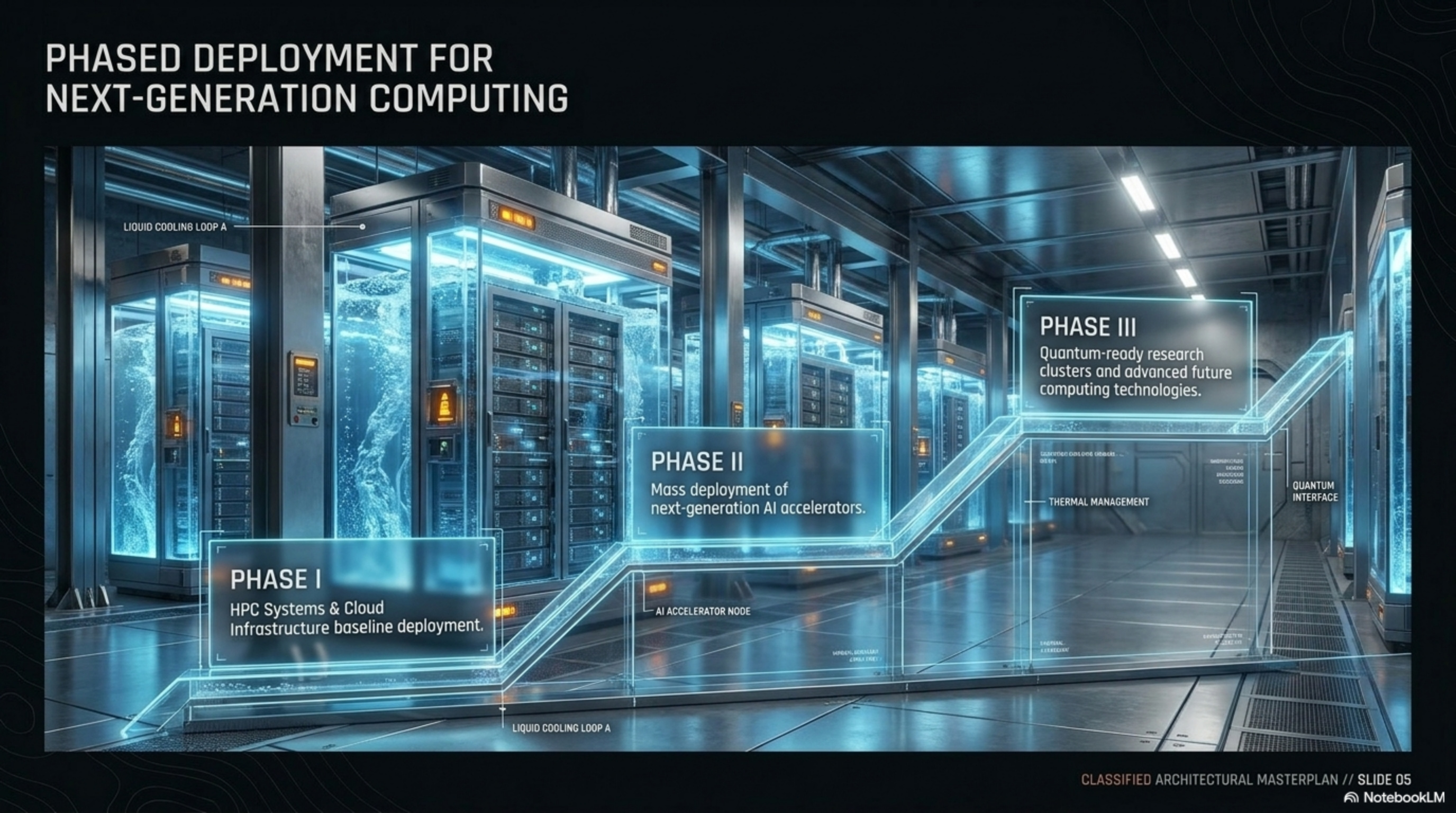
Phased deployment of next-generation AI accelerators, HPC clusters, sovereign cloud infrastructure, research super-pods, and pathways toward neuromorphic and quantum compute over the decade.
FROM INVESTOR MASTERPLAN · PG 07AI Infrastructure
/ 08
Energy & Hydrogen Ecosystem
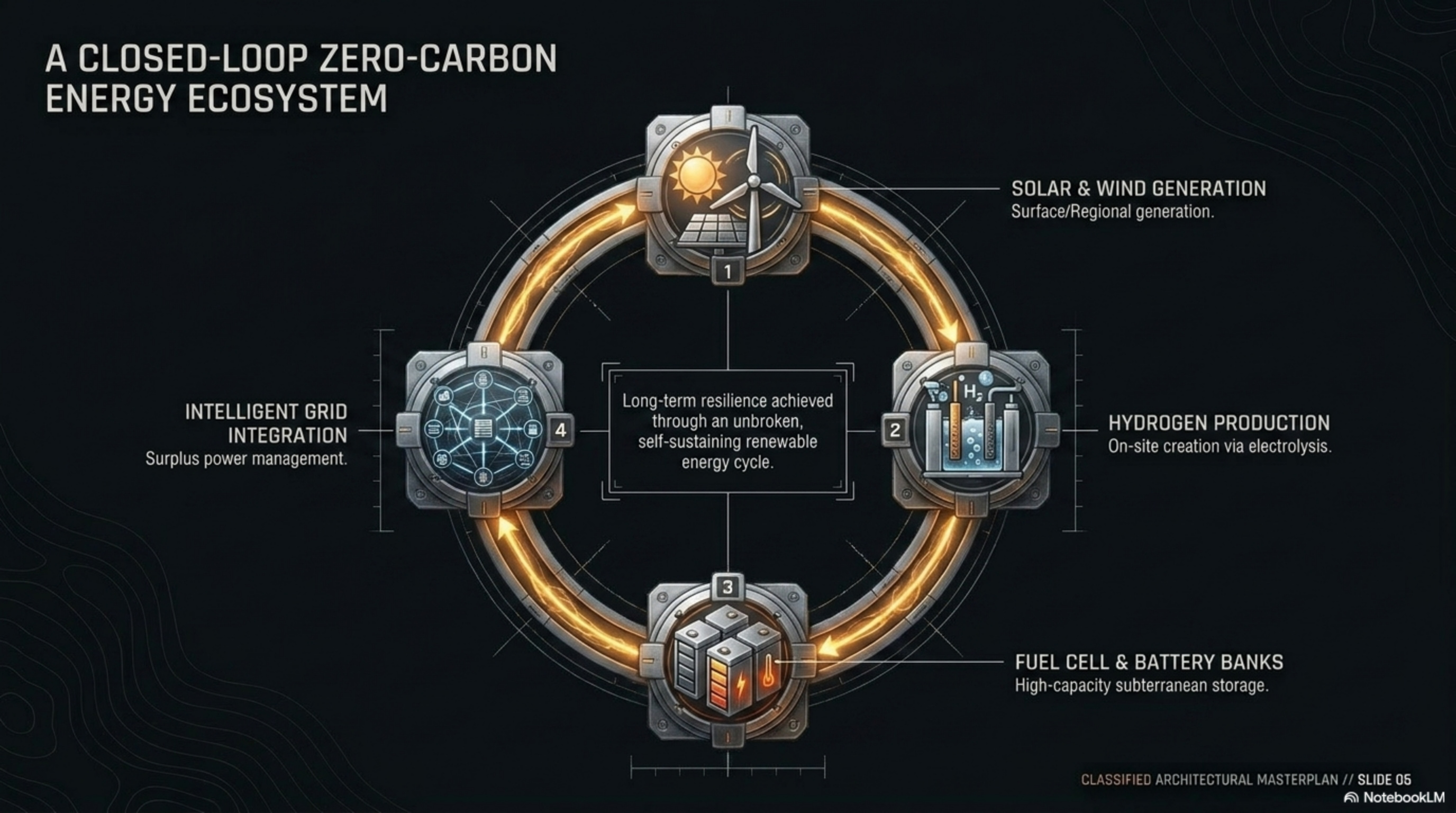
Hydropower, solar, and wind generation feeding electrolyser-based green hydrogen production. On-site fuel cells, battery banks, and dispatchable storage provide always-on resilient power.
FROM INVESTOR MASTERPLAN · PG 08Energy & Hydrogen Ecosystem
/ 09
Security Framework
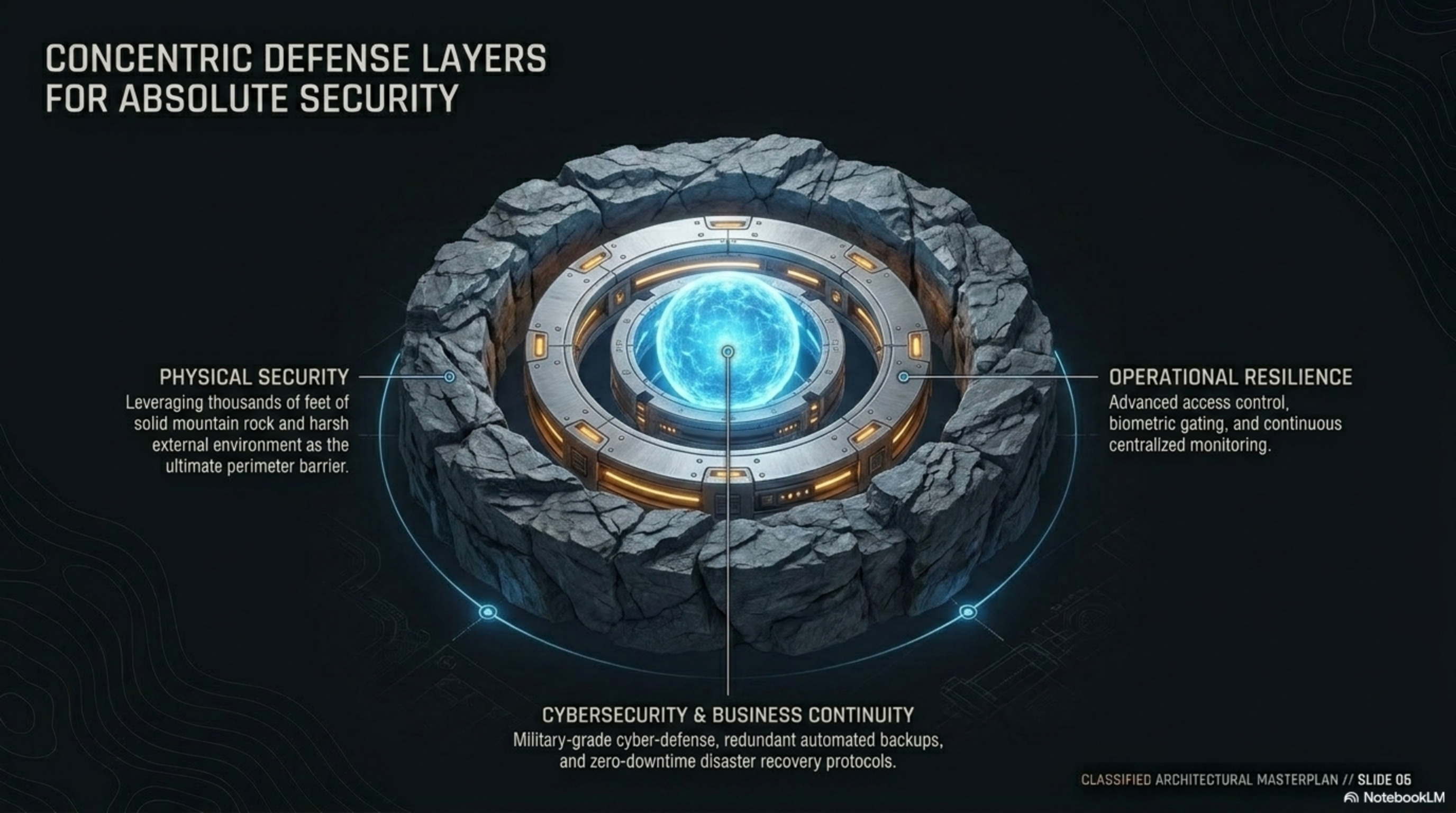
Layered physical security, cyber hardening, operational resilience, multi-factor access control, continuous monitoring, and military-grade business continuity planning embedded at every level.
FROM INVESTOR MASTERPLAN · PG 09Security Framework
/ 10
Funding Structure
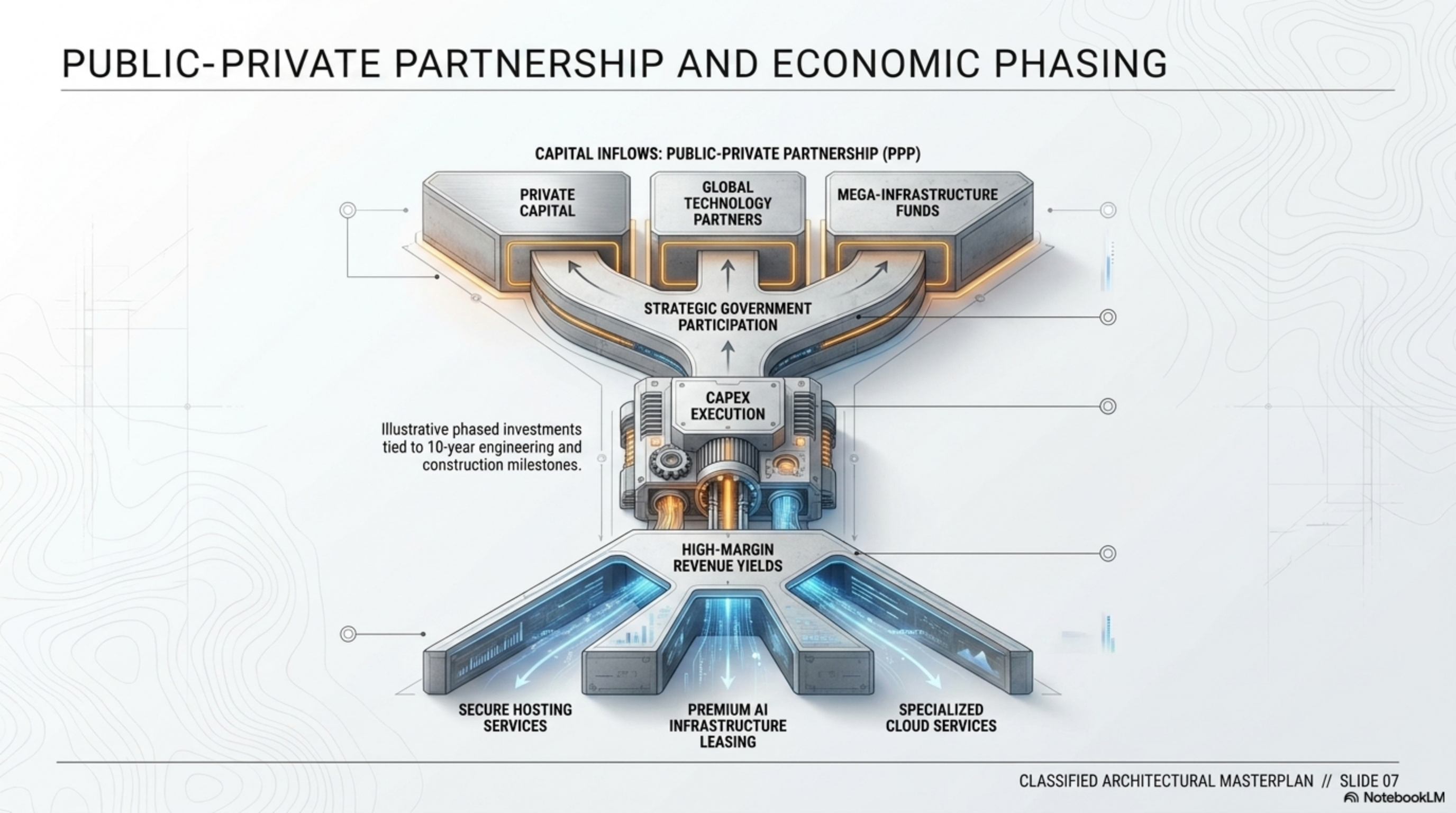
A public-private partnership model emphasising private capital, anchor technology partners, sovereign and infrastructure funds, with limited and targeted government participation.
FROM INVESTOR MASTERPLAN · PG 10Funding Structure
/ 11
Financial Model
Illustrative CAPEX phased across a decade, with revenue streams from secure hosting, AI infrastructure leasing, sovereign cloud, research licensing, and hydrogen offtake agreements.
FROM INVESTOR MASTERPLAN · PG 10Financial Model
/ 12
Implementation Roadmap
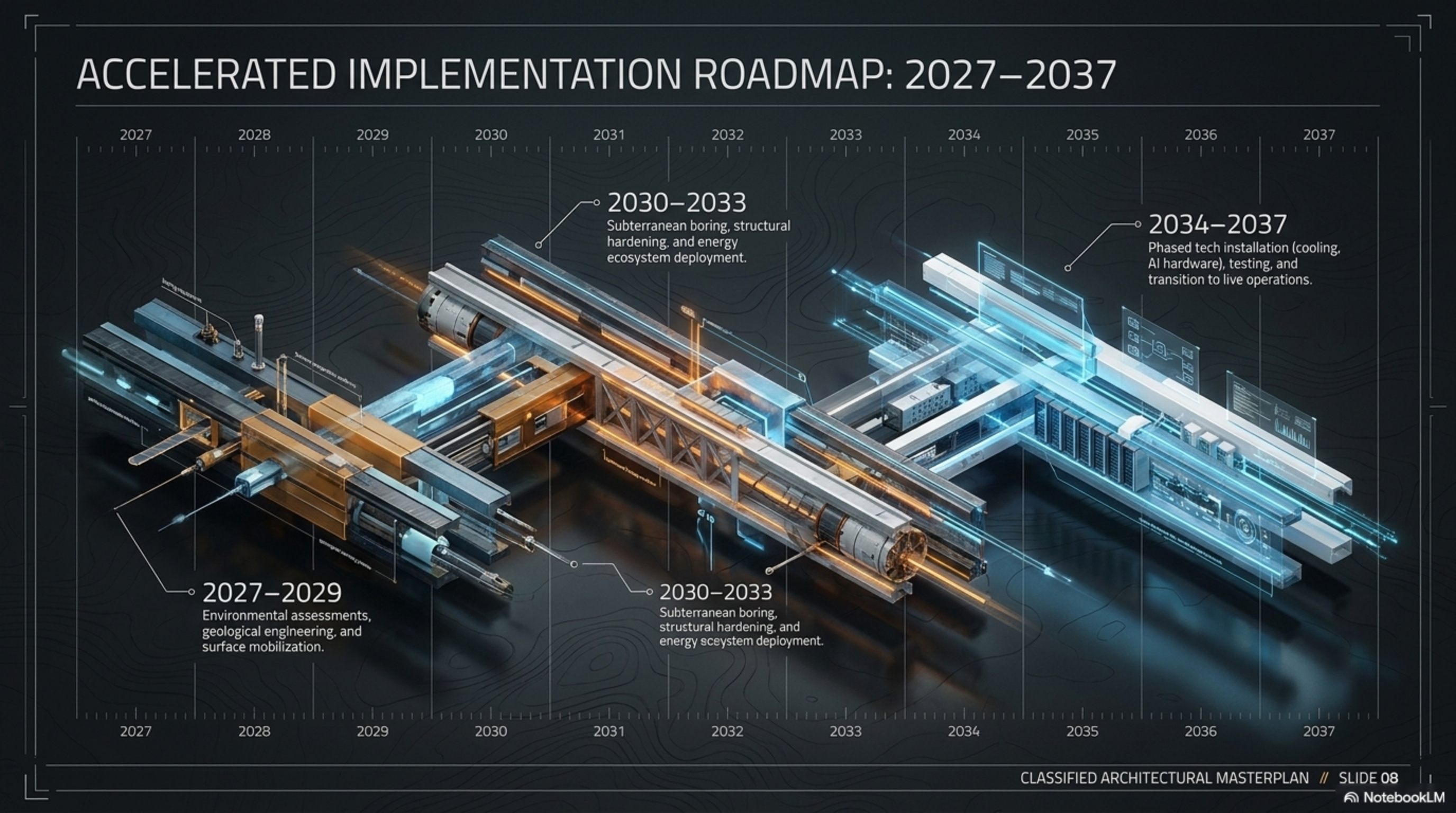
An accelerated 2027 → 2037 development model with overlapping phases of engineering, construction, energy commissioning, and progressive technology deployment.
01
2027
Feasibility & Engineering
02
2029
Energy & Site Preparation
03
2031
Phase 1 — Surface Campus
04
2033
Phase 2 — Underground Data Halls
05
2035
Hydrogen & AI Super-Pods Online
06
2037
Full Operational Capacity
FROM INVESTOR MASTERPLAN · PG 11Implementation Roadmap
/ 13
Economic Impact
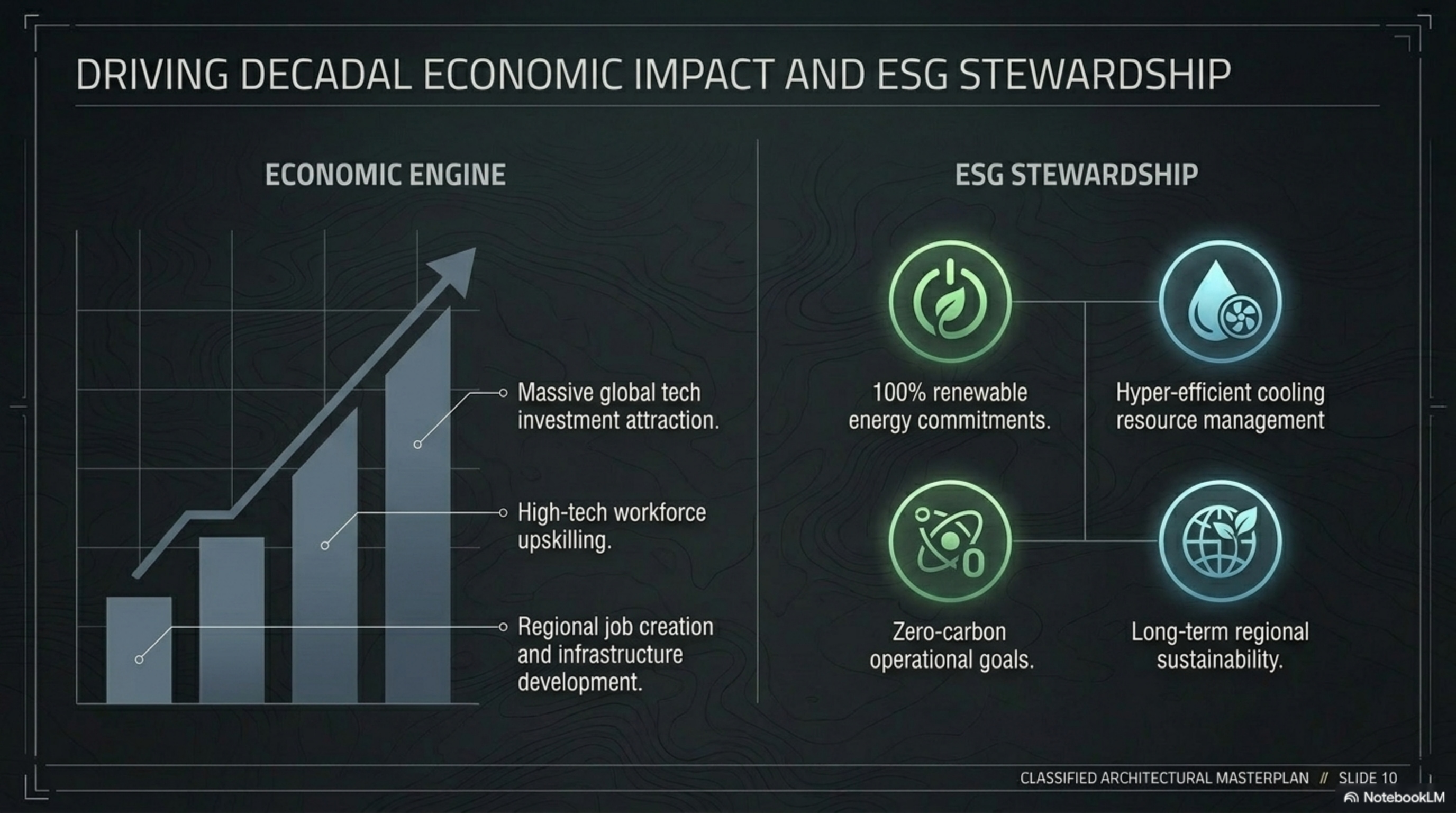
Direct and indirect employment, technology ecosystem growth, research activity acceleration, regional infrastructure development, and large-scale foreign investment attraction.
FROM INVESTOR MASTERPLAN · PG 13Economic Impact
/ 14
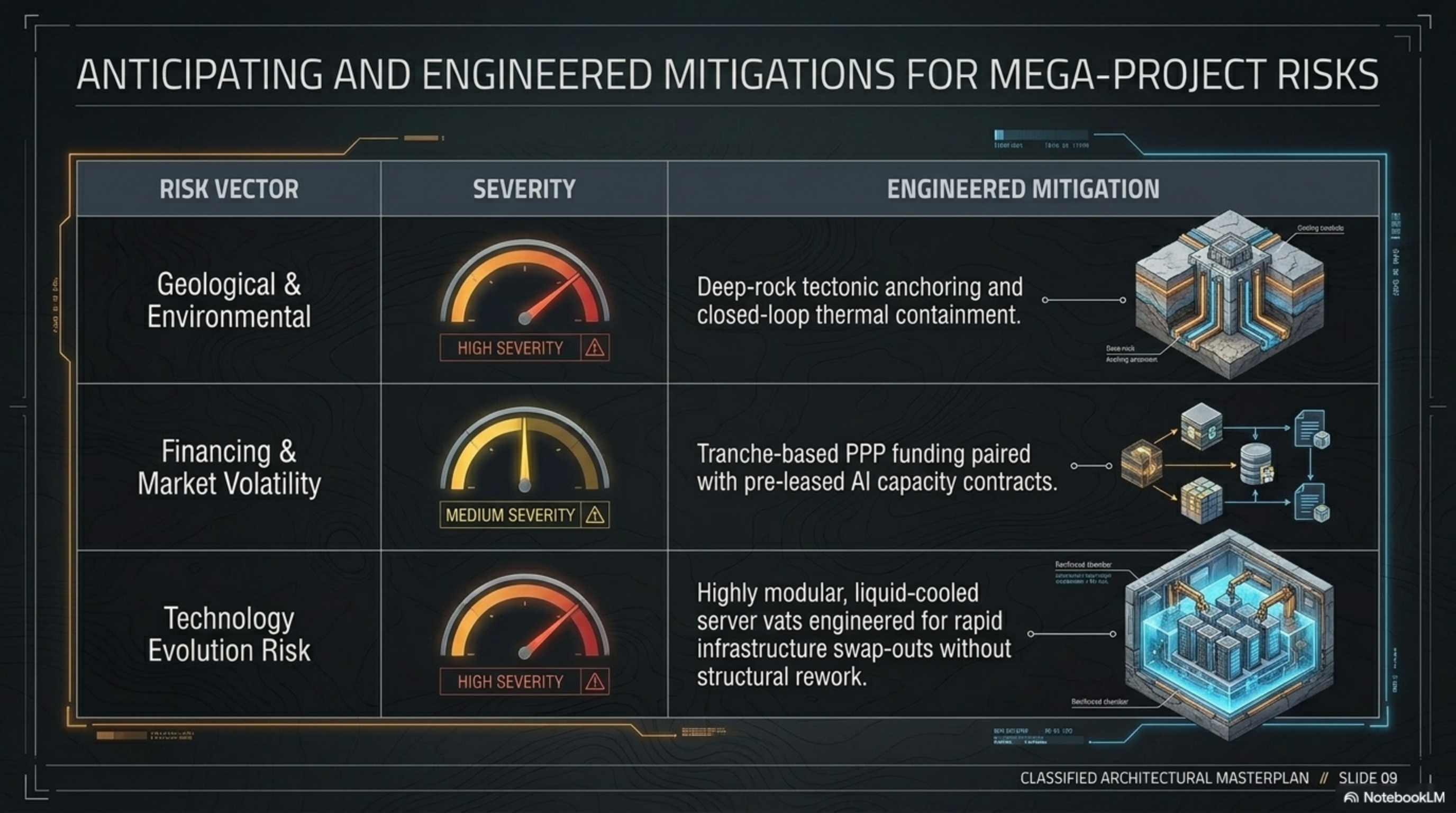
Risk Assessment
Geological, environmental, financing, technology, market, operational, and regulatory risks — each requiring detailed independent studies, mitigations, and adaptive governance.
FROM INVESTOR MASTERPLAN · PG 12Risk Assessment
/ 15
ESG Framework
Renewable energy first, efficient cooling, water stewardship, biodiversity protection, workforce development, and long-term sustainability commitments aligned with India's net-zero pathway.
FROM INVESTOR MASTERPLAN · PG 13ESG Framework
/ 16
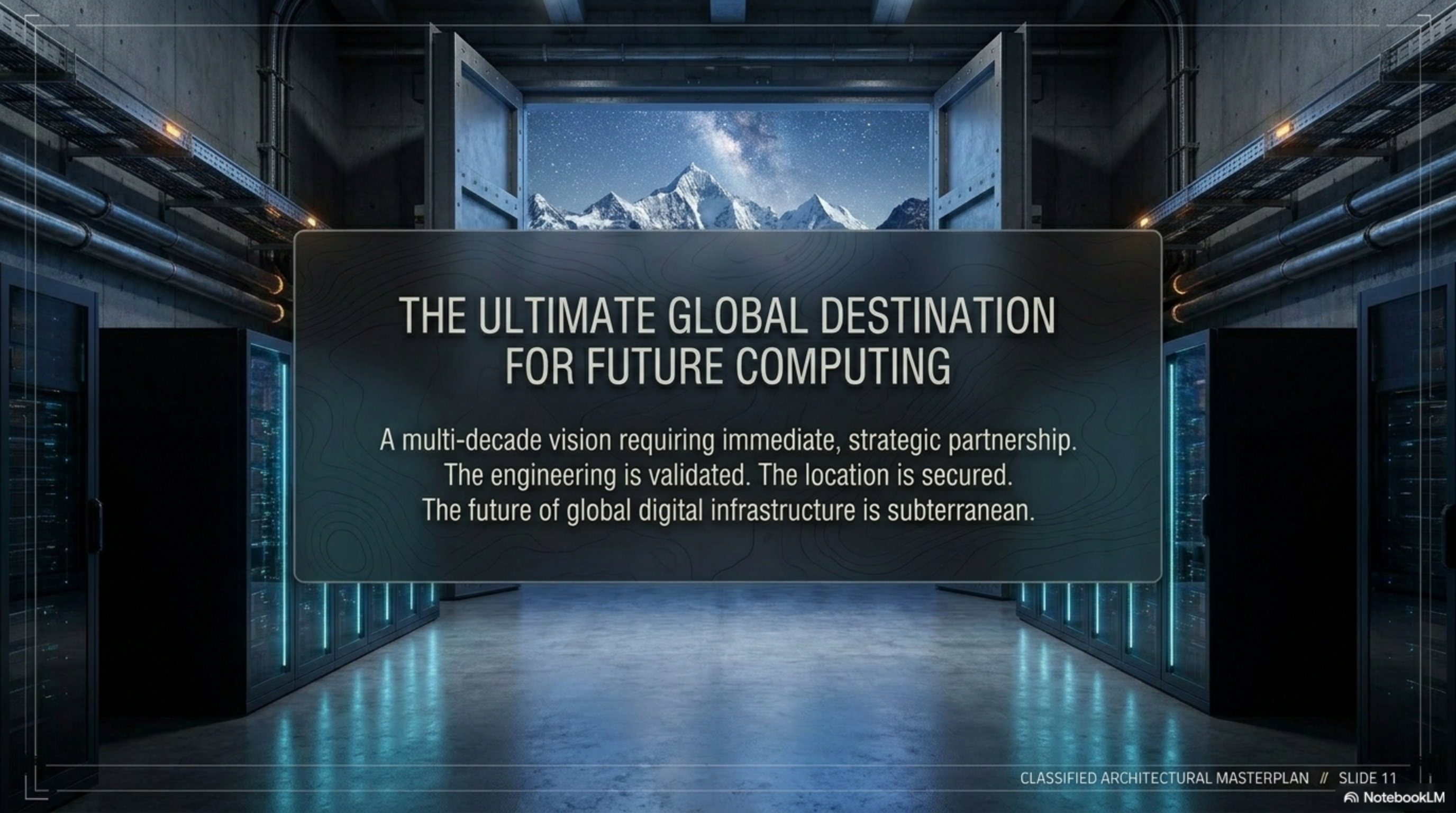
Conclusion
A conceptual long-term vision requiring detailed feasibility, engineering, environmental, financial, and regulatory validation — but one that, if realised, redefines secure compute for a generation.
FROM INVESTOR MASTERPLAN · PG 14Conclusion
EXPLORE THE PROJECT
Media Library
Video Explainer
A walk-through of the vision, location, and architecture.
Audio Deep Dive
Listen — A Himalayan Fortress for AI.
A HIMALAYAN FORTRESS FOR AI
0:0044:07
Full Masterplan Report
Download the complete investor & infrastructure document.
SubterraCore AI Fortress is open to strategic partners, infrastructure funds, and aligned private capital. Review payment channels below or send a direct inquiry.